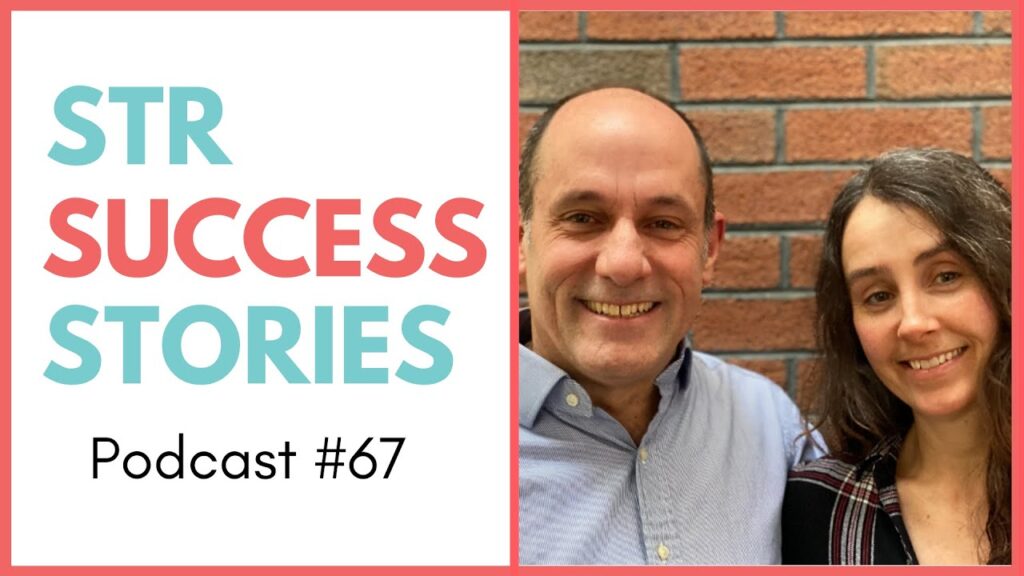
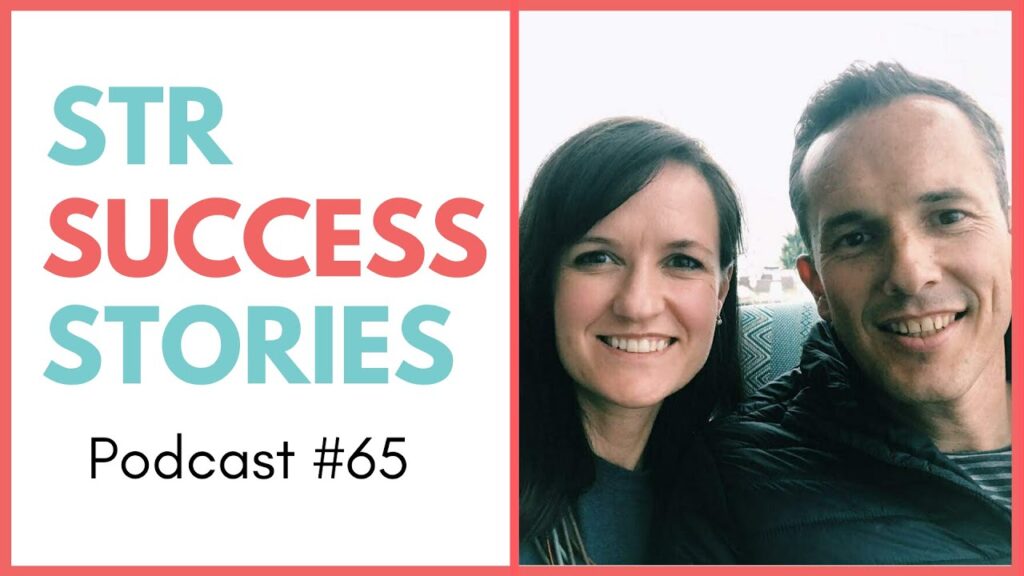
Today I had the honor of speaking with Nathan and Raquel Carrillo.
Nathan and Raquel are full-time hosts who currently reside and manage 5 units in Mexico City which they’ve scaled up to in 5 months.
Their portfolio of 5 consists of 2 properties which they own and 3 which they are subletting.
In this conversation, Nathan and Raquel share their experience of growing this business in a short 5 months, how they’ve organized their business for easy scalability, how to create units that stand out, and what it’s like managing multiple properties in Mexico.
Video Transcript
00:00:00
Now we are, for example, booked almost the whole year. We’ve been having 98 to 97% every month and we’ve been making a lot of money. And now we have an org board and we have employees have bubble Bunnings. It’s been only since may of this year.
00:00:19
This is episode number two, five of short-term rental success stories podcast. Welcome back to short term rental success stories. I’m your host, Julian Sage. This is a show where I talk to hosts about their journeys and starting and growing the short-term rental business. My goal is that you’ll be able to walk away with practical information. That’ll help you become a better host and learn how to scale your business. Like any exceptional hosts that we all strive for five star reviews. So please go on over to iTunes and let us know what you enjoy as it really helps support the show. If you haven’t done so already going over to a Facebook group, the host nation to connect with the community and other professional hosts that have been featured on the show. They have the honor of speaking with Nathan and Raquel catio, Nathan and Raquel are full-time hosts who currently reside in manage five units in Mexico city, which they’ve scaled up to in five short months, their portfolio of five consists of two properties, which they own and three, which they’re subletting in this conversation, Nathan and Raquel share their experience of growing this business in five short months, how they’ve organized their business for easy scalability, how to create units that stand out and what it’s like managing multiple properties in Mexico.
00:01:21
If you like my show notes for this episode, go to Short Term Sage dot com backslash STR two five, or if you’d like my show notes sent directly to your inbox every week, then go to Short Term Sage dot com backslash show notes with all that being said onto this week’s conversation, a welcome back host nation to another episode of short-term rental success stories. In this episode, I have the special honor of speaking with Nathan and Raquel cardio. If you please, would you mind introducing yourselves and letting the host nation know who you are and what inspired you to get into short-term rentals?
00:01:51
Hi, my name is Raquel, so it’s me and my husband that we’re doing this. And we started with the short-term rentals basically because it’s an opportunity for constant expansion and creation. So that’s what we found. And then also, because we traveled a lot and so we’ve always loved the experience of, I guess, the short term rentals for that. And we started with our own property just to make it into something that we could use and then it just started sort of snowballing from there. So,
00:02:22
And how did you first hear about Short Term renting?
00:02:25
Oh, well we were actually Airbnb clients initially, so we would use the Airbnbs and then it was, I guess, Nathan’s idea because we got into a lot of traveling situations where we would leave for let’s say a month at a time. And so it was very expensive to have this other property that was just at a standstill and wasn’t producing anything. And so he was like, well, why don’t we put it on Airbnb? You’re already, I guess, logged in there. So you can just turn it into a host and see if somebody rents it. And they did.
00:02:58
So you just started renting first property because it’s like, you, you want it to save some money. It was getting expensive. And when did it kind of click for you that it was like, oh, wow, this is actually a good business. And we should start scaling this up because right now you, you, you have two properties that you own. You’re subletting three, but you guys are kind of like on a rapid expansion. You’ve only been doing this for about five months now and you’re, you’re really kind of planning to grow up to 20 because you’re, by the end of the year, are you planning on getting investors and stuff like that? So when, when did it kind of click that, I was like, wow, this is a good business. Let’s go all in on this.
00:03:30
Look, we, we started this because we wanted to leave some months outside of Mexico city because Mexico city, it gets very intense for, it’s a easy way to say it, but we wanted to live in some other countries. And I said, we can rent her home and take that money and rent, for example, in Florida in something or something like that. We live in outside of Mexico city. It’s like 30 minutes away. We’ll even from the center, from the center or leaving a golf aria and golf glove. And it’s very far from the museums and restaurants. And, and once I put it on Airbnb, I received a lot of requests. And for me it was like, if, if listing my property here, I’m going to have that amount of clients putting in the blank on the best areas in Mexico city. It’s going to be a boom. And that’s how we started because it was at the beginning. We ha we were afraid that the clients or guests are gonna do something wrong on their property and everything was very smooth and very ethic. So
00:04:54
I think it’s pretty interesting because before Nathan, you, you, you were in real estate and Raquel, you, you were doing art. So before you, you got into the short term rental and you really started kind of like getting in heavy with this. Like where were you? Did you have the possibility of, of like moving somewhere else or was it, is it because of the short term rentals that it’s like now you have the opportunity to kind of move to different areas and, and scale this business up and, and be able to live off of your,
00:05:26
No, I do good in my other businesses. I own some buildings and I do long-term rentals and it’s, it’s very, not easy, but it’s very okay. But the way that I can scale my business on the regular long-term rentals, it’s not even similar to the Arabic arbitrage, eh, real estate, because with 1 million pesos, I can get 10 unit. And with 1 million basis, I can’t have one apartment in Mexico city, you know, so the way that I can scale the business and it’s not even close to each other. So that’s basically why I got more attention on this business, because now we are, for example, booked almost the whole year, we’ve been having 98 to 97% every month and we’ve been making a lot of money and now we have an Oracle board and we have employees and blah, blah, blah. It’s been only since may of this year.
00:06:35
That’s crazy. Wow. That is some fast growth.
00:06:38
Yeah. And then the living somewhere else, it was a plan that we actually had together initially. But now it’s turned into a reality because you do have something that’s sort of a cashflow thing. So you know that you’re going to receive some amount of money that you can use for whatever you, whatever purpose you want in the future. So let’s say that if I want to go to Florence next month, I know that I can, because I had the whole, this month booked. So there’s some money there that I’m getting throughout the whole month that I can use next month. So basically.
00:07:10
And is that basically how you are planning on scaling so quickly? Because that’s kind of the, one of the beautiful things about a short-term renting and rental arbitrage is like, once you, you know, once you have those bookings and they are deposited into your account, it’s like, you already know how much you have, and you can already anticipate and plan on what you have based off of your foot, future bookings. So is that how you’re planning on scaling this up to like 20 units by the end of the year?
00:07:34
And if it’s not specifically that, because we need to pay, if in Mexico, I don’t know how it worked in us, they’re rentals, but in Mexico you need to pay two or three different concepts before you get into a contract and you need to do some things later, legal things here, but a, I can use money from other companies that I own and work with that money. Now we got some investors that they put some money, so we can expand much, much faster. And the banks are getting to start to qualify the incomes from arbitrage or from Airbnb as good income. So they start lending money to us. So that’s how we can increase or appropriately.
00:08:31
I want to explain that a little bit further. So it’s like, they look at your statements. So let’s say that I have this apartment in Polanco on Airbnb and it’s fully booked for this month. And then you have bookings that go out through the year. So they take the total of that capital and they say, oh, so you’re going to get a revenue of blah. And they can lend you that money because it’s money that you already sort of own. So that’s, it’s sort of, they lend you money based on what your income is and is going to be. So it’s very interesting because you sort of use that instead of a bank account.
00:09:06
Wow. That is, that is pretty amazing. That that’s something that I’ve never heard of anybody doing anywhere else. So Mexico, Mexico city though, that that’s a pretty, is that just because you live there and you’re familiar with that, did you know going into that market, that it was going to be something that you could do, or I’m not sure how it is in Mexico with like the regulations and, and the bookings. How does that work? If you wouldn’t mind explaining
00:09:34
They’re revelations in Mexico are very smooth right now, but it’s going to be tough in the future because all the companies like you were in Robbie and all that stuffs and Mexico started very three and then the government started doing things here. But I think at the end, the demand of houses and listings in Mexico are bigger enough to make a good,
01:10:05
Yeah, it’s a very, very big city. So we have like millions and millions of people that live here. So we will get a lot of people at safe from the rest of Mexico that are just coming into the city for, I don’t know, work, things that are, that are last a weekend and stuff like that. And then we also get a lot of people who are from out of town, just foreigners that come in, because Mexico is a very important sort of layover stop for other places. And then let’s say they want to go, I don’t know, to Cancun, which is sort of a very big Mexican spot. Then they’ll usually stop in Mexico city first. And some people say, well, it’s a good CD. I mean, there’s a lot to do here. There’s a lot to see. There’s tons of museums and it’s a beautiful city. So it works that they sort of go like, okay, so I’ll stay a couple of days in Mexico city and then I’ll move on to wherever I’m going.
01:10:55
Yeah. Mexico city has everything because if you want to have some good food, you can come here. If you want to be museums, if you want to go to beaches, if you want to go to downtime in, if you want to work or you need to work or all that kind of talk the stops in Mexico happen every day.
01:11:15
And it’s not very expensive. I think that’s a very key point for people who are coming from outside is it’s a very big city. So let’s say it’s sort of on the same scale as let’s say, a London or New York in terms of just how big it is and how many people you have coming in, but it’s not as expensive as those cities. So it’s, it’s much cheaper to stay here than it would be to stay in London or in New York.
01:11:40
So with the units that you’re, you’re getting in Mexico, our, our people are, is there a lot of other people in the same space, kind of doing similar things or people doing the rental arbitrage model are people owning and turning the units into Airbnb units?
01:11:58
I don’t know a lot of people, but they are because when you, when I do the market research, I see the same person owning or listing some properties in good areas. I know one of my closest friends that he already owns nine apartments, and he’s doing very good. Another one has six, but how can I say there is a lot of space and growing here in Mexico and for what I can see on the Facebook chats and groups in the whole world, because for example, in Mexico, Airbnb create tech com a campaign on the streets that says you can stay in their BNB here in Mexico or any place in the world. So Airbnb now is not only on the iPhone or on the internet, it’s now on the buses and on the concerts. And so there’s promotion on the streets promotion. That’s very good and Mexico for what I understood it last year, it was the third mask, a visit place via Airbnb in the world. So,
01:13:11
Yeah. And, and how, how do people take, so when you are talking to landlords and saying, Hey, this is what our business model is, how, how have you been able to, to bring that subject to them?
01:13:23
It’s very three get-to-know. It depends. It’s like, there’s no specific or there’s for me, there is no like a scientific way to approach one. The only one that I change and it start to work much better. It’s that I never say at the beginning, I want to sublet, or I want to do Airbnb because right away they hung up right away. They don’t even want to listen to you. So I start saying like, Hey, I own a business. And I do a corporation rental for short long-term. And they, sometimes they got confused because they don’t know if I’m a broker or if I am the owner or what I want, but that’s much better than no, you know? And now I have been like on the future three or four properties, now I can reject some people. And the beginning, it was, no, please, please. I want your property. So, yeah, it’s very different. Now. I have a very good contract. I, I, I look for the properties by my own. I don’t have any guy or broker in the middle because I need to do it. It’s much, much easier.
01:14:42
Is there any, you have any advice for people that maybe are interested in Mexico city? Like, are there things that people should watch out for or things that maybe do better for short-term renting?
01:14:55
Yeah. Yeah. The tax, the taxes here, the people that usually rent a place or something like that, they want them the payment every month in cash. And that’s sometimes very difficult because our BNB doesn’t allow the cash, you know, and that creates a lot of problems for me because I need to understand how to handle cash, you know? And that’s, for me, that’s one of the most, eh, important or problems. So you’re in Mexico city and there is a lot of informality.
01:15:34
That’s what I’m kinda, that’s what I’m kind of curious is, is this something that is a, maybe a scalable business in Mexico when people are maybe kind of inclined to an old system, you know, exchanging money, maybe they don’t want to put like, you know, smart locks or door locks for automated check-in. Is this something that is a scalable, automated business or is it very kind of clunky
01:16:02
Them? The people that work in Mexico, like the common people, they’re not so expensive, so you can hire people and it’s not very expensive. It creates a lot of not automate automatization as in us, you can make it right, but you can hold on that.
01:16:25
For example, I was looking into some of the, since we started scaling and the point is to expand quickly, I was looking into some of the automated small books, not also that, but I looked into properly and those sorts of things, and they didn’t actually work for Mexico city because of the same thing that Nathan saying, it’s not as automated, but the way that we managed to sort of turn it around was that we have this one person who’s in charge of the cleaning. And then I said to her, okay, so look, we have these properties. And at first she could do fine on her own. And then there’s this point where you just can’t, you, there’s no way to cope with everything that you need to do. And so she started bringing in more people and making her own sort of little business inside of our own business. So each person turns into this hub of extension and you get people who just sort of have to replicate what they’re doing and show somebody else how to do it. And then just, I treat with this one person and I say, okay, so you need to be in these three apartments on the 26th. And then she has to figure out how she’s going to make that work.
01:17:33
Now with, with, with that D do you always need to, are they able to like, use, like, like some people use like Gmail or they use like Google calendar to be able to coordinate our, do your cleaners? Is there, do you need to constantly be in contact with them and telling them like, Hey, you need to go to this unit, this unit, this unit, or is it pretty automated?
01:17:56
Well, I think it’s a little bit of both. So what we do is I’m the only one, well, me and Nathan were the ones that actually get the bookings. So I will just log them into my own sort of little notes. And then I just pass them onto the person and they log them as they wish to do so. So I don’t care if they go, let’s say it. So we have a sort of check-in and check-out policy. It said 12:00 PM checkout, and then 3:00 PM check-in. So they have a three hour window. Sometimes it’s more, sometimes it’s less, but that’s usually what happens to get all of the cleaning done. And then all of our welcome stuff set up and everything that we need. So I don’t mind if they get there at 1:00 PM, if it’s ready by three, then it’s fine by me. Like they can do their own sort of thing in that, but that’s because I already trust the person.
01:18:43
I know how they work. And in the beginning it was a lot of, sort of, okay, so you have to be here and then you have to do this. And I would go with them and say like, okay, so we’re going to do the sheets this way and, and stuff like that. So at first it wasn’t very automated, but now it’s gotten to the point where we know each other very well after a couple of months of actually doing this and just sort of putting it in practice and I can trust her to show somebody else how to do it. So I don’t have to worry about it anymore.
01:19:11
Very nice. And w what has been the most challenging part of starting your, your short-term rental business
01:19:20
And then amount of time that you need to put into looking for the market? Because at the beginning, we were a little bit of afraid that we’re, where are we going to put our first 5,000 or $10,000 to start at one property? And it’s more like, I’m thinking, like, how can I explain this? Because at the beginning we said, no, let’s take a small apartment. So we don’t have a lot of, eh, of risk on it. And let’s take it very slow in my, at the beginning. That was my, like my first concern. But now I want, I only want to have the biggest, eh, properties that I can get, because it’s the same amount of time. It’s the same amount of effort that I need to put. And it’s much more profitable, a house of seven rooms for 44 people. It costs a lot of, a lot of money, but it pays off, you know, so for me, they experienced at the beginning, we were alone.
02:20:33
We didn’t, we didn’t have any coach, or we didn’t have any safety net to work on that, but just patients and be very, very, very, very systematic, because it’s not something that you, at least your properties takes photos with your iPhone and the people love. They’re just a lot of competition a lot. And there are some people like us that are very good at doing this, and they have oral boards and they have money and they have intelligence. And, and for me now it’s like a very, very, very scalable business and I can do it any PR in any place in the world. So,
02:21:12
Yeah, I think it’s important to note there also that we made it sort of very automated for us, not necessarily, you know, just as, as the operations go, but just how to, let’s say a design, a property it’s become sort of very mainstream in a way, because I’ll just take a theme and I know exactly what to do with it. I get a budget and that’s it. So it’s become sort of very expandable in that sense. So what we realized is that you do need to have a good design. You do need to have sort of specific things that will help you differentiate from somebody else.
02:21:50
I’m not bored because if you don’t have an oral board, you’re going to go down very easily. If you want to do it for, for big, you know, you only want to rent your home and get some extra money. It’s okay. But if you want to own a hundred, or I dunno, whatever anyone wants that he wants a hundred, nah, you need to, you need to have an airport because if you don’t have policies and you don’t have a specific tasks, specific products, and if you don’t have like a, a, a company, you know, like, like USA, they have the best franchise in the world. So we are doing that or working with Airbnb. Very good.
02:22:34
You just replicate what works.
02:22:37
So, so if you wouldn’t mind explaining a little bit about your, your organization board, because, and how, how, why that you, you feel that that is so important and how that has been able to help your business,
02:22:48
Because we have seven divisions and on each division, there’s an, a specific, we call it and product and with an M product and refer to something that that division needs to work to get it done at the end. It doesn’t matter what they need to do. They need to get that product at the end. And each division has one product. And that product, if we get each of those of those seven products at the end, we have the biggest product that we need to a sell to the guests that it’s a positive experience. So each division needs to work toward that direction. So we can get that, eh, five stars. Eh,
02:23:35
So when you’re talking about the product you’re talking literally like Airbnb, they have like cleanliness, hospitality, all of that. You have dedicated people to those types of
02:23:45
Products.
02:23:47
Yeah. For example, the first division, it takes care of the
02:23:56
Database
02:23:57
Database, you know, and they’re welcome. Hey, they, they register all their email phones and do the hello to the guests. Then division two, it works on everything that has to be with marketing market research and
02:24:15
Professional photographs of the listings,
02:24:18
Right? Eh, the description of the listings and look at the other competition competition that how they work, what they do and that type of things. For example, last week, we started to selling art, Mexican art on the properties that gives us some extra money. And we started with selling, like, for example, Listerine in diet Coke and
02:24:43
Exactly forgot their toothbrush. So I have a little two-person
02:24:48
And division treats, everything that has to be with financial incomes and outcomes, everything, everything is there. Division four is everything that has to be with experience and the setup of a new listing and experiences. Everything that has to be with gleaning, with hosts, with taking care of the guests. Since key book, everything is smooth to him. Division five is everything that has to be with a qualifications and corrections reviews, how what’s everything, and how we can improve each property on each process. And division six is expansion. So, and division seven is the owners basically. So each one has to has some specific task and that’s how we can scan it very easily.
02:25:42
It sort of goes moving in from one to the other one. So the first thing that happens is you get a property let’s say from the seventh division, right. And then you go into, so you put that D that new property into your first division, which is sort of your interior communication. So you log it as a new property, and then you have to sort of say, okay, so we need a good marketing for this. And then you start taking pictures of that property. And then in the third division, you say, okay, so we have this much money for rent and this much money for design. And so then you set it up and you do everything. You start getting bookings and everything. So you have a good experience in the fourth division. And then let’s say that somebody says, okay. So I went into the bathroom and the towel rack fell off. And so division five has to go, oh, okay. So we need to correct that. And they’ll send it back to the person in four so that the person in four will correct it. And then in six, it’s just sort of extending everything so that we get more people so that we can just replicate the process again. And again and again. So it turns into a sort of cycle.
02:26:53
I like that because you’re, you’re, you’re, you’re taking this approach because right now it’s, it’s YouTube. From what I’m understanding is you you’ve laid out this whole kind of roadmap, these, these, these different divisions, but you guys kind of are managing the different divisions currently, but the way that you’re, you’re planning on scaling it is that you’ll be able to step away from that, that, and be able to just manage, have people managing these specific parts so that you can be on the division seven, correct?
02:27:21
Yeah, exactly. That’s the, you got the point perfectly. The point is that you get people who can do these jobs for you, and everybody knows what we call it sort of hats. So you put on your hat and you know, what you’re supposed to do. So it doesn’t matter that I’m doing it, or he’s doing it because you know what your product is and you know, what actions you need to take to get that product. So if each person is very clear on what they have to do, it’s very easy to expand it and to give that job to somebody else, because you just sort of just keep replicating,
02:27:54
Right? Because you’re creating the systems within those divisions that can be passed on to somebody else so that you can step away. And they can just manage that at one particular area. That that’s a really nice way to kind of chunk up the information. And so it doesn’t feel overwhelming to just pass this on to somebody else.
02:28:11
Yeah. We can do it any in any place.
02:28:16
That’s a good point.
02:28:18
And what has been the, the most challenging part of scaling your business? So after you got your first unit and you, you, you had it up and running. How, how was that getting more units?
02:28:28
Mm, for me, it’s the fear of failure that that’s like the, the biggest problem. Because for example, today, I’m going to sign one contract and it’s very close to another property that we have in Condesa Condesa. It’s like Soho in New York, for example, to give you something like that. And sometimes on division seven, we are looking at, Hey, do we need another property in the same building, eh, same street. And you know, that, that kind of Pearson in that for me, the darkness of this business, that I don’t have any coach, or I don’t have any Gandalf from the way that can let me know of course, to go. It’s like the hardest part, because Airbnb, it’s very intelligent. They, for me is one of the most amazing business that ever exists. Airbnb, because this is like some to tell you why wa eh, we sign a contract and the owner gave me two weeks to set up everything.
02:29:51
And in what, 30 minutes, I already have three books for in the future. You know? So I paid the rent with only $200 that the photographs, the pictures cost me. So it was like, if I want to give for free my apartment and I posted in on Facebook, I don’t know if I’m going to have that amount of people wanting my apartment for three. So coming back to what I was telling you, the expansion for me, it’s the, the most problem to know where to put the other coins, where, and how is the demand in that area
03:30:37
And then what to do with it also, because I mean, that’s his part was his expansion. And for me in the experience area, it’s how to know how to best use the specific thing that I’m given. So I’ll say, I don’t know, let’s say that they go, okay, so you have $2,000 and that’s your budget. And so I need to make that into something that will be very noteworthy. So for me, the most difficult part has been okay, so they did all the work as to where it needs to go, how much money it’s going to cost and everything. And then I need to put their ideas into the physical universe and make it a thing. So it’s sort of, that’s been the most, I guess, challenging, which is also the most rewarding part and the most fun part, but it’s difficult to sort of, you start getting confused as to, okay, but what if I do this?
03:31:25
And then I could do that, but then that’s going to cost more money. So should I invest in that? Or should I invest in something different or make it very cheap? And so it’s been sort of a tug of war to see at what point. So now I know that I can invest in some key things that will make it better and make them be able to charge more. And sometimes it’s just sort of this, okay. You need to give me a little bit more because it’s going to work out. I promise. So that’s just knowing what the balance is, has been. I think the most difficult part for me
03:31:57
And this, this is a good question to kind of play off of that. What do you do to set your units apart?
03:32:03
Okay. So usually it’s a very specific thing with the art and design, which is great for what I do, because that’s literally my other business. So we try to, for example, I’ll put accent walls in each room because I know that that’s going to look good in a photograph, and it’s going to make a space much more habitable and much more, I guess, homey. And then you don’t need to necessarily do anything with the rest of the walls. If you have this one accent wall. So for example, in one place, there’s this brick wall outside. That was great. It actually came with the apartment, but I started playing off of that. So I got that as the theme. So the theme is now sort of this New York brick house. And it works really well because you have this one thing that sets you apart. And then there were things that I started replicating.
03:32:51
So we always put in a like extra beds because in the end it is a business. So every head that you can get into sleeping in your apartment is going to be extra income and revenue for you. So to do that with the less money and to make it an actual comfortable thing was, was sort of difficult, but we found this product. That’s like a, a poof. So like you can sit on it and it’s really comfortable. And then you take off the top and it turns into a bed, which is awesome because it looks very good, but it’s still sort of works as a bed. And it’s not the typical sofa bed that I hate them all. They look so terrible. So that was, that was sort of the one thing that we do, we do put in a lot of extra beds for like, we have this one bed in the room and then you can pull out a second bed.
03:33:48
So that was very important. And also just what I’ve been saying about the accent walls, trying to use them a lot of plans, a lot of Mexican design, because what we figured was at first, we were trying to make them very, just sort of, I guess, from other places, you know, like this New York apartment. And then we started realizing that if people come to Mexico, they want to see Mexican things, right? So, no, we changed the whole setup of that. And we’re making this, the house that Nathan mentioned with the six or seven bedrooms, you can fit 30 to 40 people in there, which is comfortably. Yeah, it’s great. And the design is completely Mexican. Like the house is bright pink, like Mexican pink. So it’s awesome because you can see it through, from the whole block and sort of went around that one thing and it just started scaling. And so now the floors are like this mosaic thing and all the walls are different colors. And it just sort of turned into this thing where you need to find a way to make something beautiful without necessarily putting too much money into it. But with key things that will make it stand out. So that’s been the most important thing.
03:34:54
And there’s, there’s actually, we had a, another host that was on the show, one of our most recent episodes with Ty and Mar sink. And one of her questions was actually, how do you build out and design such a big house? Cause you guys are, are taking the, one of the biggest houses in Mexico city is what you said. So how do you, how do you the biggest house in Mexico city? So how do you, how do you design and decorate and make each room and that whole place unique without it being like cookie cutter?
03:35:26
Well, we, well, what I did with themes, so what I do is first I will literally design the house. So first he found the property and the property needed a lot of renovations
03:35:37
Was something amazing for me because I didn’t have to pay any rent. We partner with the owners because that house was not abandoned exactly, but they didn’t live there since 1974 in anything the best start in Mexico city.
03:35:55
And it’s a big house, big,
03:35:56
Big week, for example, if I need, if I want to rent that property, at least for me, it will cost me $10,000 per month, at least. And now they’re gonna get 15% of the incomes like our royalty, and they’re gonna make a lot of money. Also. We got a agreement that if I sell the house, I can get 40% of the profits. And I mean, you can start to making another businesses if you are smart and you understand the real estate business
03:36:31
And for the design part, it was basically to get a theme. So it was the Mexican theme and then each room has to have a different theme. So let’s say we’ll go through colors and we’ll invest in this one accent wall that I was talking about. That’s always sort of the go-to thing and in getting as many beds as possible in. So the first thing was I go to the house that you found, which is great. I take every single measurement in the house and I will make my own sort of little blueprint, a digital blueprint, and then I’ll stop or start playing around with what I want it to look like. And it’s actually very close to what my original idea was. So it’s great because I can visualize and then get an, a differentiator in. So will with a house this big, it was very easy to put in a lot of common spaces.
03:37:27
So we tried to make most of it into beds because that’s where your actual revenue is and where your income is going to come from. But you also have to make it a good experience for the people who were staying there. So it was very important to put in specific things that are going to make it more desirable for the people who will go and stay there. So we invested for example, in a projector to make a little outdoor cinema. And it’s something very, very simple, but it’s a great hook and it wasn’t that expensive to make. And you can literally just sit down under the stars and watch a movie. And it’s great. So those sorts of things were very important for us to make a good experience because in the end, the product is the actual experience. It’s not necessarily the design or finding the place. So it was all sort of geared towards that. So everything that we do is with that in mind. So we went, for example, last weekend, we went to WaveLab, it’s another city in Mexico and we went to buy decoration, Mexican stuff for this house. And so we will go that extra mile and go somewhere else and just to make it special. So that’s also important to make it something that people won’t usually see in other places so that they want to stay at yours and start somewhere else.
03:38:47
Yeah. We set up a space to do coworking and we create a common out bathrooms, so they can take a shower at the same time, eight people, you know, that that is more, more like hostile, something like that, but Airbnb hostels. So it’s something much better than our regular hostile.
03:39:12
So in that house, you’re, you, you’ve created like a community bathroom type, a hostile environment.
03:39:23
I mean, we have like one kitchen, then we have one dining room, we have one sitting room, then there’s the, what I mentioned about the outdoor cinema. And then we have all these different rooms. So some of them will have a bathroom and some of them won’t. And for the ones that don’t, we have a big bathroom that lots of people can be in at the same time. Because if you’re thinking, I mean, we have 30 to 40 people in there. You do need to have a lot of places where they can sort of hang out. And then also the bathroom is very important. That kitchen is very important to like, we have this huge four meter long table that we put like a little benches. And so if somebody wants to actually sit there and work, they can, and somebody else can be having breakfast at the same time. So I think that’s what he needs with the hostel thing. And we’ve put in a coworking bench as well, because we know that people do want, or do sort of like us. They have this business that they can manage over the internet. And so they do want to have a space where they can work. And so we sort of thought about that and geared it towards those types of people.
04:40:26
Well, so, so this, this home, cause initially kind of what I was thinking was he at this place and it’s going to be like, just maybe for like, like a big family or something like that. But what you’re saying is that this unit is going to be multiple people can book different rooms in this place and it’s going to be like a hostile that there’s going to be community and you’re creating an experience for the guest
04:40:46
That can happen too. It depends on the market. Yeah. We don’t have like that specific viewpoint on that property. We are looking to solve problems or experiences to big groups that usually come to Mexico or big families or a lot of friends and whatever. And they want a big place. They want to eat together. They want to hang out together and they want to feel that they own a place in the heart of Mexico in Condesa. And there’s only three more places in Mexico. They can accommodate
04:41:25
Accommodate
04:41:26
20 people, something like that, 20 something. But they’re very tight in here. We have like are real good place and a lot of space. Yeah.
04:41:37
Hi, I’m, I’m, I’m curious because I think that that’s super interesting that you, you know, the biggest house in Mexico city, you’re able to just go there and say, Hey, you know, partner with me and I’ll give you a split of the profit. And you worked at all these, all this really amazing deal. How, how, how do you, how do you even structure something like that? Where, because I’m sure that there needs to be a lot of renovations and stuff to the, to the whole home. You said that there was some, it was a bit older you need, and you’re putting in all these, these new things are, are you guys also splitting the cost of rehabbing it? Or is he just doing that? Or
04:42:13
No, we’re investing like $80,000. Something like that. A little bit less. That includes the renovation of everything. Like anything from like rotting walls and stuff like that. To floors, Babs beds, all the furniture, all the art, painting, the walls, everything is in there. Something that it’s very important that the people, eh, get the point. It’s the money. If you aren’t going to invest the money on this, you need to invest it on the furniture, not in the walls and not in the floor, because if you need to run or you need to go out, if it’s not working, for some reason, you, the only thing that you can take, it’s not the pipes, it’s a bed and it’s a couches and you know, they that’s it. So maybe there’s 80% of 70% of my budget there it’s for furniture. So if I need to, if that, if this house doesn’t work, I, now I can get five or six apartments right away.
04:43:21
But no, we’re not partnering with them. I’m looking for properties daily, daily. I have maybe three, four appointments daily and I make maybe 20 inquires daily. So for me, that’s the only way to understand the market to, to also to feel the owner, because there are some owners that they are in need of money and they are very, you know, yeah, yeah, come here and we can set up right away. So it’s not something I can tell you like scientific things, but it’s more like a feeling that you need to develop on the sales. And because you are selling yourself, you’re not buying the property, you are selling your concept to them and then they need to buy from you the contract. So when I understood that for me, it was much easier.
04:44:19
Nah, I think that that’s a, that’s, that’s really interesting that, you know, you, you, you’re having to sell yourself to, to them in order to get this business. But a lot of people are saying like, Hey, you know, just, just come here, just come here, rent, rent, rent. And you have to discern whether this is going to be good, a good business, but also while you’re also selling yourself.
04:44:40
Yeah. For example, we, we create a video that explains or business, and it’s a very good video we created with very good designs were very good music so they can understand because in Mexico, the people that owns the best places, they are not junk people. They’re not like us. They are maybe peoples that has 70, 80 years, 60 years because that’s the people that have the money or they, everything, something, something like that in
04:45:09
Where did a property from their parents, for example. And they have it there. And it’s making very little money when it could make so much more, but they don’t know how to put it into practice because they don’t know anything about this whole
04:45:21
And then a one too. So once I said to the BA the one person I’m going to make this amount of money that she canceled the contract and he started Airbnb. So also you need to our what you’re saying, but we create that whole package of sales from us as our public relationships so they can understand what we do. I take a success stories from the landlords and they say, no, he pays me very good. The rent, he’s very healthy call, blah, blah, blah. So I have a carpet or a file that I can share with other landlords. So they understand that I have a good business. You know, I CA I understood that I need to create a trust on my company. So I saw it like that. I, I saw that I need to create a business, eh, presentation. I need to create a website. I need to create this, this, this, this there. So once they look at me, they saw me like, okay, these guys are going to take my apartment for three, five years. So I want him. So, yeah,
04:46:36
There’s a lot of, there’s a lot of education and a lot of trust that you have to build up before you get into these relationships, is, is there, is there anything that you would do differently if you had to start from scratch,
04:46:48
Don’t take apartments one bedroom, and also don’t invest in walls on floors, a lot of money on that,
04:47:01
Unless it’s absolutely necessary to take it to the bare
04:47:04
Minimum. Right. Right. And also, eh, do it much, much bigger because it’s the same amount of effort to handle one or a hundred properties. So for me, no, I don’t have any regrets, actually. I was thinking on that, but not that we would change. No, I didn’t. I wanted to understood this business before, because I spend a lot time renting long-term rentals. And it’s not that profitable as this one. And
04:47:40
Where do you see short-term rentals going in the future in Mexico
04:47:42
City? I don’t know. I really don’t know that that’s something that scares me a little bit because I, I had the, I have different viewpoints. I was doing it there. I was a landlord six months ago or a regular landlord. And now I became a, an arbitrage landlord or something like that. And he needs, sometimes I said, if this is going to work, wow, it’s amazing. But how many petition that we’re going to have or how I can scale it? One thing in Mexico that I, I saw as a good, good and bad indicator is the bank doesn’t give money to everybody as in us, or it’s not a cheap the bank here, eh, charged 20% per year for one vessel for each Beso, they charge you 20 to 18%. For what I understand in us, it’s 2, 3, 4, 5%. So that makes the, if you don’t have some money with you, you can’t do it. You can’t pay your rent with a trade card in Mexico. There is no way to pay with great dots. So for me, that’s good because I have the possibilities to go into that market and expand and expand it. And, but I see very good future because Mexico, it doesn’t matter what happens in Mexico, always there’s people that want to come to visit Mexico city. You know, it’s like,
04:49:25
It’s such a big city that you’re, if you have, so the only thing that you need to survive is a food, water, and a place to sleep. So there’s always going to be somebody who can pay a rent for a place because they do need somewhere to be. So they’re going to invest in that and in food before they invest in or anything else. So the point is, if you always have something that you can use as an active asset, it’s always going to be, I mean, maybe you rent it a little bit cheaper, maybe a little bit more expensive, but you’re always going to need somewhere to sleep. So I think that’s an important point with this business. If for some reason, Airbnb just suddenly drops off the face of Mexico city and nobody can do anything with it. Then you can always take those properties and rent them because it is an asset that you have. So I think, I mean, it shouldn’t, it’s growing substantially. And so it looks like it’s going to go up and up, or that’s at least the tendency that I’m seeing, but if for some reason it should fail, it’s a very easy, simple thing to sort of make into something else without much effort on.
05:50:34
And are you all planning on just expanding within Mexico city? Or are you looking at other areas right now as well?
05:50:39
They’re already asked in other countries. Yeah. As I said, they were worried that we have, we are very sure and confident that we can replicate it in Africa, or we can replicate it in any place. We need to understand the laws and the taxes policies, and you know, that kind of things in each country. But this for me, it’s very, very easily to, to work with it.
05:51:08
You need to just find a person that’s going to be sort of your safe point in a different country. And that’s it. You just sort of expand it from there. So I think it’s very simple and we are looking at, for example, some cities in the United States, I think Europe would be awesome. So hopefully,
05:51:26
And do you have any questions for maybe another host? Is there anything that maybe you’ve been wondering about, or if you could ask someone that is maybe at the next level, from where you guys are a question, what, what would that
05:51:40
Yeah. How they, how they look at the future as a question that you said to me, ask to me, because the only thing that I don’t like from this is that if for some reason there would be a, B changed something the whole, or word collapse, you know, like if they want to change something of, they want to charge something or they put the company on the market stock in other people want to change something, you know, that type of things, maybe everything will collapse it. There are not very smart people on handling power or something. And they only one profit, something like that. It’s how they look at that, how they can risk a much more money on this type of businesses. And also, eh, what is better to put a lot of attention on places like beaches that are very seasonable or like the metropolis like Mexico city or New York, or, you know, that, that, that type of things. Yeah,
05:52:49
No, that, that, that’s a really good question. And just to kind of re rehash that it’s, you’re, you’re, you’re, you’re asking is like, how do companies, like, let’s say Saunder or these big companies that have multiple, multiple properties, what is their a backup? Like, if, if they just say, you’re not allowed to do this in New York city, or you’re not allowed to do this in whatever area, what do you, what do you do with those, with those properties is what you’re asking.
05:53:13
Yeah. Basically, and the money that you put on the down payments and everything, you know,
05:53:19
Because you do also get long-term leases to then you sublet. So if you have a lease for, let’s say three to five years, and then suddenly at the second year they go, oh, guess what? You can’t do Airbnb anymore. Then what do you do with that remaining lease?
05:53:35
Yeah, it sounds like it’s, it’s, it’s, it’s an issue. We, we had a, another guest on the show Farhana bossy. And he, he had about 40 properties in the Boston area, but due to regulations, he had to start scaling them back. And he, I, he didn’t really have that kind of like backup system set in place for his, his organizational board. And he just had to start dissolving properties and, and, you know, either selling the furniture, getting rid of the furniture. So it’s kind of an unfortunate thing, but I think it’s an important question to, to maybe once I get someone on the show that has scaled up to much larger amounts, maybe within certain cities that have had to dissolve, like what do they do with those units? I think that’s a really good question that I’ll be sure to ask one of the next guests, but thank you so much for coming on the show today.
05:54:22
It was such an honor to hear, and I wish you the best of luck and success on your expansion and what the house, and until next time, host nation, keep on hosting Hopi hosts benefit from the show. If you found value, please go on over to iTunes, leave us a review and let us know what you enjoy about the show. If you’d like to talk to the hosts that have been featured in these episodes, as well as the community, going over to our Facebook group, the host nation, talk to your hosts in the next episode, keep on hosting.